
Categories
MauiRealtor, Maui Residential, Kihei Vacation Rental, MauiCondosForSale, Maui CondoPublished July 30, 2025
What Should You Know Before Buying a Condo in Kihei?

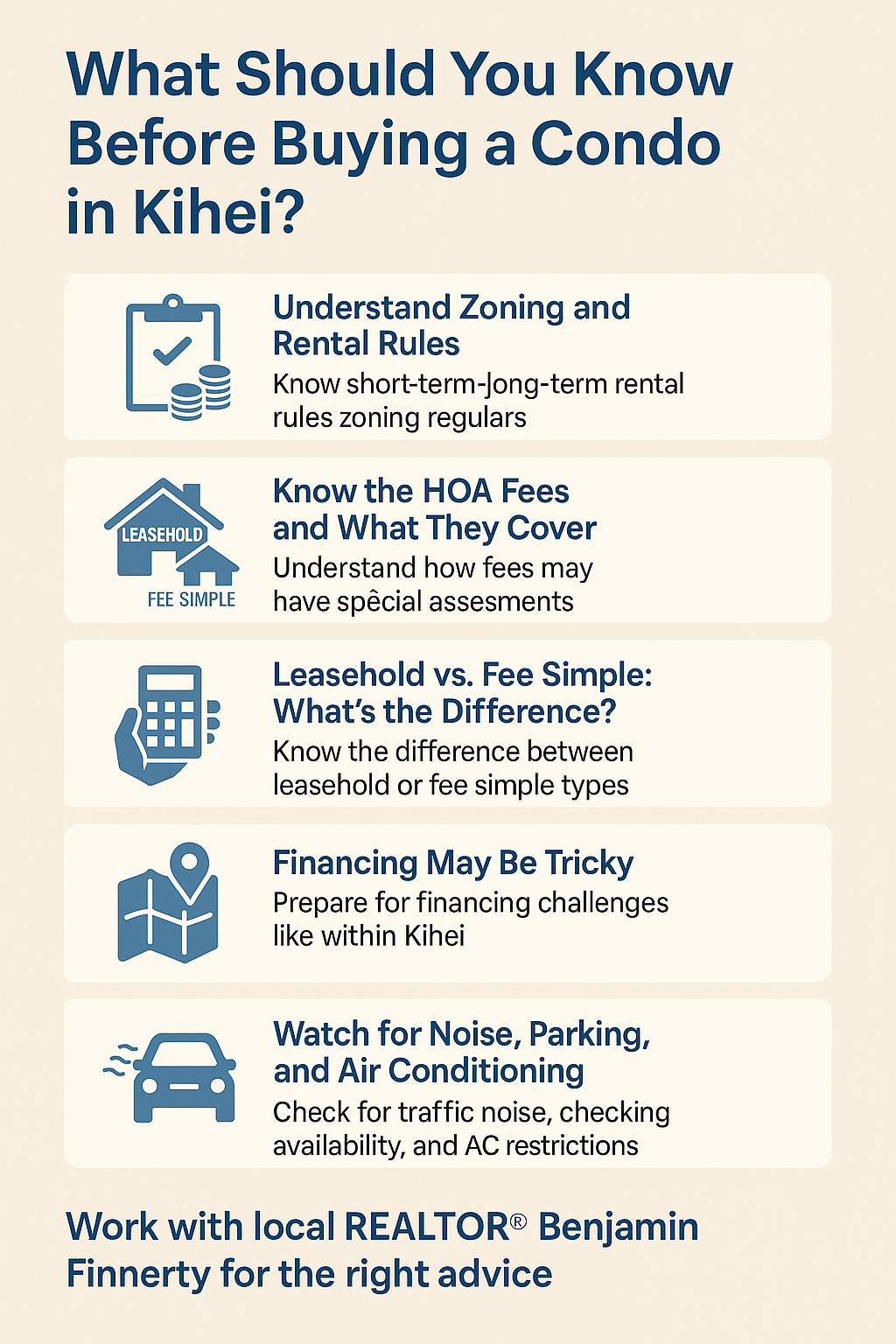
What should you know before buying a condo in Kihei?
Before buying a condo in Kihei, understand the zoning (short-term vs. long-term rentals), monthly HOA fees, special assessments, and the differences between leasehold and fee simple ownership. Work with a local expert to navigate these details.
Why People Are Buying Condos in Kihei
Kihei has become one of Maui’s most desirable areas for condo buyers—thanks to its sunny climate, walkable beaches, and relative affordability compared to nearby Wailea. Whether you’re looking for a vacation rental, a second home, or a primary residence, Kihei offers variety. But condo ownership here comes with unique local considerations that every buyer should be aware of.
1. Understand Zoning and Rental Rules
Not all condos in Kihei are created equal—especially when it comes to rentals.
-
Short-Term Vacation Rentals (STRs): Some condo complexes are zoned for short-term (less than 180 days) vacation rentals, which can offer strong income potential. But others aren’t.
-
Hotel vs. Apartment Zoning: Complexes like Maui Banyan, Island Surf, and Kihei Akahi are zoned for short-term rental, while others are strictly long-term residential.
-
County Crackdowns: Maui County is potentially changing short term regulations for some apartment zoned short term rentals. Buying a condo not approved for vacation rental and using it as one could lead to fines or legal trouble.
Work with a REALTOR® who knows which buildings are legally allowed to operate STRs, and which ones may face revocation of STR rights—and always double-check with the county or a real estate attorney.
2. Know the HOA Fees and What They Cover
Monthly Homeowners Association (HOA) fees can vary widely in Kihei.
-
Typical Range: $400–$1,200 or more per month depending on size, location, and amenities.
-
What’s Covered: Often includes water, sewer, trash, landscaping, building insurance, and exterior maintenance.
-
Special Assessments: Always ask if the complex has upcoming repairs or financial issues that could result in large one-time fees.
In some older oceanfront buildings, assessments for sea wall repairs or plumbing overhauls can hit $30,000 or more per unit.
3. Leasehold vs. Fee Simple: What’s the Difference?
Some condos in Kihei are leasehold, meaning you own the unit but lease the land it sits on.
-
Fee Simple: You own both the condo and the land. This is the most desirable and typical form of ownership.
-
Leasehold: You own the unit, but lease the land for a fixed period—often with expiration dates in 20–50 years.
Leasehold properties are generally cheaper, but they can come with restrictions, added fees, and resale challenges. If you’re unsure, ask your agent or lender to explain the implications before making an offer.
4. Financing May Be Tricky
Not all Kihei condos qualify for conventional financing.
-
Condotel Classification: Some buildings with front desks or hotel-style amenities may be classified as “condotels,” which can limit loan options.
-
VA/FHA Approval: Not all buildings are approved for VA or FHA loans. Ask your lender to check the list of eligible properties.
-
Cash-Only Sales: In some cases, condos with structural issues or active litigation may only be purchased with cash.
Tip: Get prequalified with a local Maui lender who understands these nuances.
5. Consider the Micro-Location
Even within Kihei, location matters.
-
North Kihei: Quieter, more affordable, often windier. Popular with full-time residents and long-term rentals.
-
South Kihei: Closer to Wailea, better beaches, more short-term rental options, and higher prices.
-
Near the Beach vs. Mauka (mountain side): Oceanfront units demand premium pricing, while properties just a few blocks inland can offer better value.
Local knowledge goes a long way here. A seasoned agent like Benjamin Finnerty will help you find a location that matches your goals.
6. Watch for Noise, Parking, and Air Conditioning
-
Noise: Some buildings are on South Kihei Road, a main thoroughfare. Ask about double-pane windows and insulation.
-
Parking: Some units only come with one stall. Guest parking may be limited.
-
AC Restrictions: Some older buildings don’t allow split AC systems or window units. That matters during hot Kihei summers.
Final Thoughts: Why a Local Expert Matters
Buying a condo in Kihei isn’t just about picking your favorite unit. It’s about understanding:
-
Ownership types
-
Financing obstacles
-
Zoning rules
-
Association health
-
Long-term investment impact
That’s where working with someone like Benjamin Finnerty, REALTOR®, really pays off. He knows which buildings have hidden red flags and which ones offer the best value for your goals—whether that’s cash flow, appreciation, or lifestyle.
Ready to Explore Kihei Condos?
Let’s talk about what you're looking for—and I’ll help you find the right fit in Kihei’s dynamic condo market.
Benjamin Finnerty REALTOR® | Director of Sales, The 808 Team RS-83812
Keller Williams Realty Maui RB-21851
808-481-9748
benjamin@the808team.com
中文摘要
本文列出在科哈购买公寓前需要了解的要点,包括分区(短租与长租)、每月协会费用(HOA)、特别评估,以及租赁产权(leasehold)与永久产权(fee simple)的区别。文章指出,科哈的协会费用差异较大,并非所有公寓都符合常规贷款条件,即使在科哈内部,地段也很重要。此外还需关注协会的财务健康与长期投资价值。购买前建议咨询熟悉本地情况的专业人士。Benjamin Finnerty 是毛伊岛的 REALTOR®,是南毛伊地区的房产专家,服务范围遍及全岛。
普通话服务
Benjamin Finnerty 精通普通话,可以用中文为您解答在毛伊岛购房的各类问题,包括公寓协会文件、贷款、短租法规以及购房流程。
联系方式:电话/短信 808-481-9748,电子邮件 benjamin@the808team.com

The 808 Team Maui
| The 808 Team | Keller Williams Realty Maui
or another way