
Categories
Financing a Maui home purchasePublished November 13, 2026
Buying a Maui Condo With a State Repair Loan: What to Check

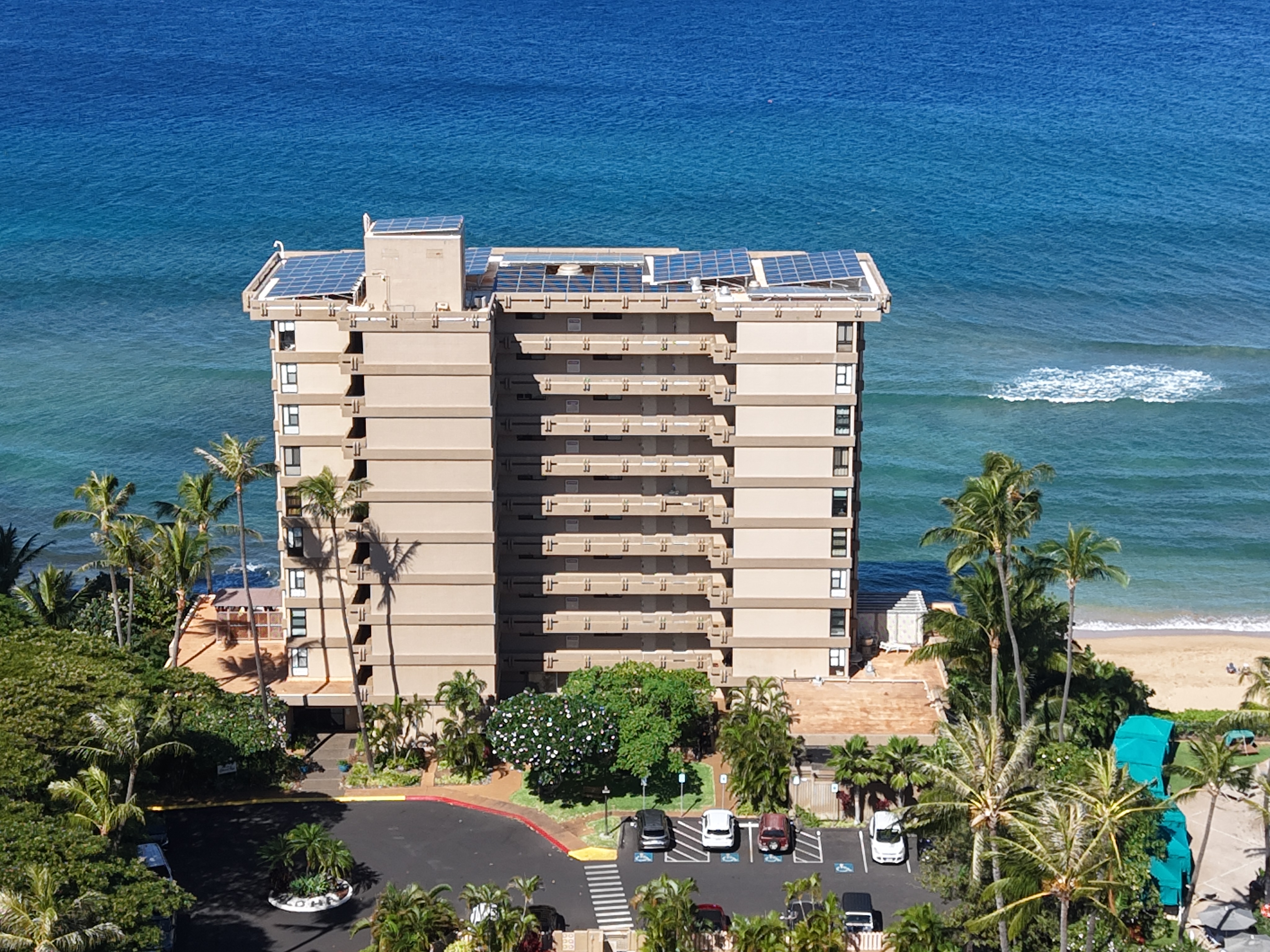
What does it mean if a Maui condo's AOAO takes a state repair loan?
It means the association is borrowing to fix big-ticket problems like roofs, pipes, fire sprinklers, or concrete spalling, and every owner pays the loan back through their share of the dues. Hawaiʻi's new Condominium Association Loan Program lends at 7% fixed for up to 20 years, so instead of a five-figure special assessment, you take on a monthly cost that can last two decades. Before you buy, find out the loan amount, your unit's share, and how the repairs affect insurance and financing.
By Benjamin Finnerty, REALTOR® | Director of Sales, The 808 Team | November 12, 2026
A Kīhei condo with low dues and a fresh coat of paint can still be carrying a large repair bill. In 2026, there's a new way that bill can show up: a state loan to the association.
Hawaiʻi launched the Condominium Association Loan Program in May 2026. It's run by the Hawaiʻi Green Infrastructure Authority (HGIA) and funded with about $20 million under Act 296. It exists because so many older Hawaiʻi condo buildings can't get repair loans from banks.
For you as a buyer, it changes the math. It can be good news, but it's never free.
How the program works
The program lends directly to condo associations (AOAOs) that need work done but have been turned down elsewhere. Here's what HGIA's July 2026 program guide spells out:
- Who qualifies: an association that has received at least one decline letter from a bank or credit union.
- What it pays for: repairs that lower the building's insurance risk, including fire sprinklers, pipe replacement, roofs, and spalling repair.
- Rate and term: 7.0% fixed, up to 20 years. Leasehold projects may get shorter terms.
- How much: up to 100% of the project cost, with a 0.50% loan fee and no prepayment penalty.
- How it's secured: the association pledges its assessments, the dues every owner pays, and a government lien is recorded against the whole project.
- What the association promises: to build up its reserves over the life of the loan and to carry full replacement property and hurricane insurance once the work is done.
- Deadline: no new loans from this money after June 30, 2027.
That last point matters. If you're looking at a building with known repair needs, the board may be deciding right now whether to apply.
What it means for your monthly cost
Without a loan, a building facing a $4 million repair usually has two options: a special assessment collected up front, or putting the work off. With a loan, the cost gets spread out.
Here's a simplified example. It's a hypothetical building, not a real one.
- An 80-unit Kīhei building borrows $4 million at 7% for 20 years.
- The payment is about $31,000 a month.
- Split evenly, that's roughly $388 per unit per month, or about $4,650 a year, for 20 years.
Compare that with a one-time assessment of $50,000 per unit. The loan is much easier to absorb, but over 20 years you'll pay more in total because of interest.
Your real number will be different. Owners pay by their common interest percentage, so a larger unit carries a larger share. The new insurance and reserve requirements can push dues up on top of the loan payment, too.
The questions to ask before you write an offer
This is the part buyers miss. The loan rarely shows up in the listing. You find it in the condo documents and board minutes, which in Hawaiʻi often arrive after you're already in contract. Ask early.
- Has the AOAO applied for, been approved for, or taken an HGIA or other repair loan? Get the amount, rate, term, and start date.
- What is this unit's share of the payment, and how is it billed? Is it built into the regular dues, or charged as a separate assessment?
- Is there also a special assessment? A loan doesn't always cover the whole job.
- Who pays what at closing? Assessments payable over time usually stay with the unit, but that's negotiable. A seller credit is a reasonable ask when a big obligation is coming.
- What does the title report show? The program's government lien is recorded against the whole project. Your escrow company and title report will show it. Ask your escrow officer to explain it.
- What happens to insurance after the repairs? Full replacement coverage is good for the building, but it may cost more than the policy the association carries today.
- Can the unit be financed? Fannie Mae treats projects with unfinished critical repairs as ineligible until the work is completed. Ask your lender how this building's repair timeline affects your loan.
For more on how lenders review condo buildings, see Financing a Maui Condo in 2026. For the up-front version of this problem, see The Truth About HOA Special Assessments on Maui in 2026.
Is a building with a repair loan a deal or a red flag?
It can be either. It depends on the building, the price, and your plans.
It can be a good sign when the board has a real engineering plan, the work fixes the problem that made the building hard to insure, and the loan payment is already in the budget. You're buying into a building that's fixing itself instead of putting it off.
It deserves more caution when the work keeps growing, the reserve study is old, or the minutes show the board is still arguing about scope. That's when costs rise after you close.
It can also be a pricing opportunity. Hawaiʻi's Real Estate Branch has noted that large special assessments can push owners who can't pay to sell, often at a reduced price, as buyers factor the cost into what they offer. With Maui condos taking a median 199 days to sell in September 2026, according to the REALTORS® Association of Maui, you have room to ask for the documents and price the obligation into your offer.
This is exactly what Benjamin looks for when he reviews a building with a buyer. The same two units in the same complex can be very different deals once you see the minutes and the loan terms.
Frequently Asked Questions
What is Hawaiʻi's Condominium Association Loan Program?
It's a state loan program run by the Hawaiʻi Green Infrastructure Authority that lends to condo associations for risk-reducing repairs like roofs, pipes, fire sprinklers, and spalling. HGIA's loans are 7% fixed for up to 20 years. Associations must first have been declined by a bank or credit union.
Who pays back an AOAO repair loan?
The owners do. The association repays the loan from the assessments every owner pays, and it pledges those assessments as security. Each unit's share is usually based on its common interest percentage.
Does a repair loan replace a special assessment?
Often it reduces or spreads one out, turning a large one-time bill into a monthly cost over many years. A building can still levy a special assessment for costs the loan doesn't cover, so ask about both.
Can I get a mortgage on a Maui condo that's doing major repairs?
Possibly, but it depends on the building and the loan type. Fannie Mae treats condo projects with unfinished critical repairs as ineligible for conventional financing until the work is completed, so talk to your lender early.
How do I find out if a Maui condo has a repair loan?
Ask for the current budget, the reserve study, the last 12 to 24 months of board minutes, and any disclosure of loans or assessments. Your title report and escrow company will also show liens recorded against the project.
Before you make an offer
A state repair loan can be the reason an older Maui building stays insurable and financeable, but it comes with a monthly cost you'll carry for years. Know the number before you commit.
Before you write an offer on a Maui property, send it to Benjamin. He'll review the zoning and STR status, tenure, AOAO documents and reserves, any association loans or assessments, and the flood zone, and tell you what to ask about — so you go in with eyes open. Call or text 808-481-9748 or email benjamin@the808team.com for your free Pre-Offer Property Review.
This article is general information, not legal, tax, or lending advice. Loan terms and eligibility are set by HGIA and your lender and may change. Consult your lender, attorney, or CPA about your situation.
About Benjamin Finnerty, REALTOR® | Director of Sales, The 808 Team
Benjamin Finnerty (S) is a REALTOR® (RS-83812) and Director of Sales for The 808 Team at Keller Williams Realty Maui (RB-21851). A South Maui specialist based in Kīhei, he works with buyers all over the island on condos, short-term rental investments, and luxury homes, including what Bill 88 and the Minatoya List mean for their purchase. He is fluent in Mandarin. Reach Benjamin at 808-481-9748 or benjamin@the808team.com.
中文摘要
在毛伊岛购买公寓前,请先了解业主协会(AOAO)是否申请了夏威夷州的公寓协会贷款计划(Condominium Association Loan Program)。该计划由夏威夷绿色基础设施管理局(HGIA)管理,为屋顶、水管、消防喷淋系统和混凝土剥落等维修提供贷款,固定利率7%,期限最长20年。贷款由全体业主通过管理费分摊偿还,因此可能在未来多年内增加您的月供成本。出价前,请先确认贷款金额、您所购单位的分摊比例、是否另有特别评估费,以及维修工程对保险和房贷审批的影响。
普通话服务
Benjamin Finnerty 精通普通话,可以用中文为您解答在毛伊岛买房的所有问题,包括公寓协会文件、贷款、短租法规(Bill 9 和 Bill 88)以及购房流程。
联系方式: 电话 / 短信:808-481-9748 电子邮件:benjamin@the808team.com

The 808 Team Maui
| The 808 Team | Keller Williams Realty Maui
or another way